How Biathlon Scoring and Rules Work
Biathlon scoring and rules come down to a simple idea: athletes ski, shoot, and pay for missed targets. Results are based on ski time plus penalties, but the race format decides how those penalties count. That is why a leaderboard can flip so fast.
What biathlon is and why scoring can feel confusing
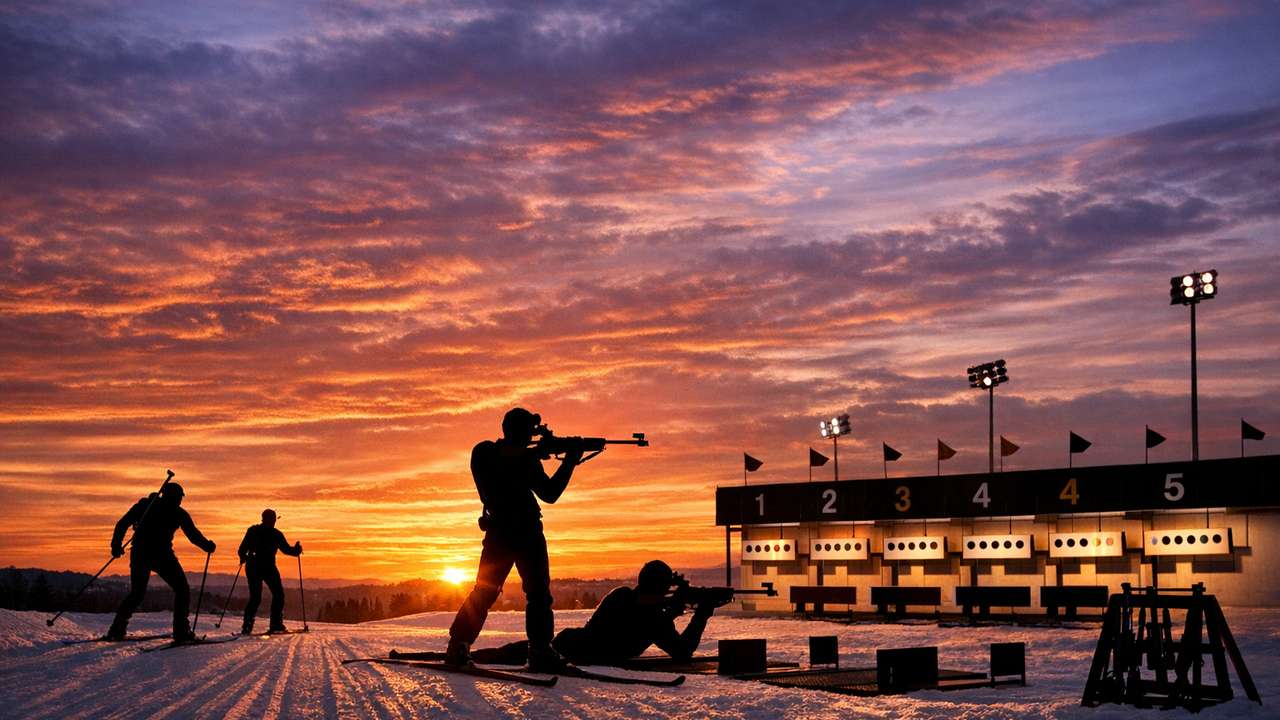
Biathlon asks athletes to master two very different skills. They ski hard with speed and stamina, then stop at the range, control their breathing, and hit small targets under pressure.
That mix is why the fastest skier does not always win. Missed shots carry a cost, while clean shooting can keep a steadier athlete in the race. Think of it as a moving balance: time gained on the course, time spent shooting, and penalties avoided or absorbed.
The biathlon scoring system: time plus shooting penalties
Biathlon rankings usually come from total time after shooting penalties are applied. In interval-start events, athletes may not race side by side, so the clock and adjusted standings matter more than who appears first on screen.
Other formats are more direct. In pursuit, mass start, and relay races, the first athlete or team to finish usually has the clearest advantage, as long as all penalties and rules are satisfied.
For new viewers, the key is that a miss does not look the same in every race. Some formats use penalty loops, some add time, and relays have their own process. Identify the format first, then read each shooting result.
How shooting penalties work
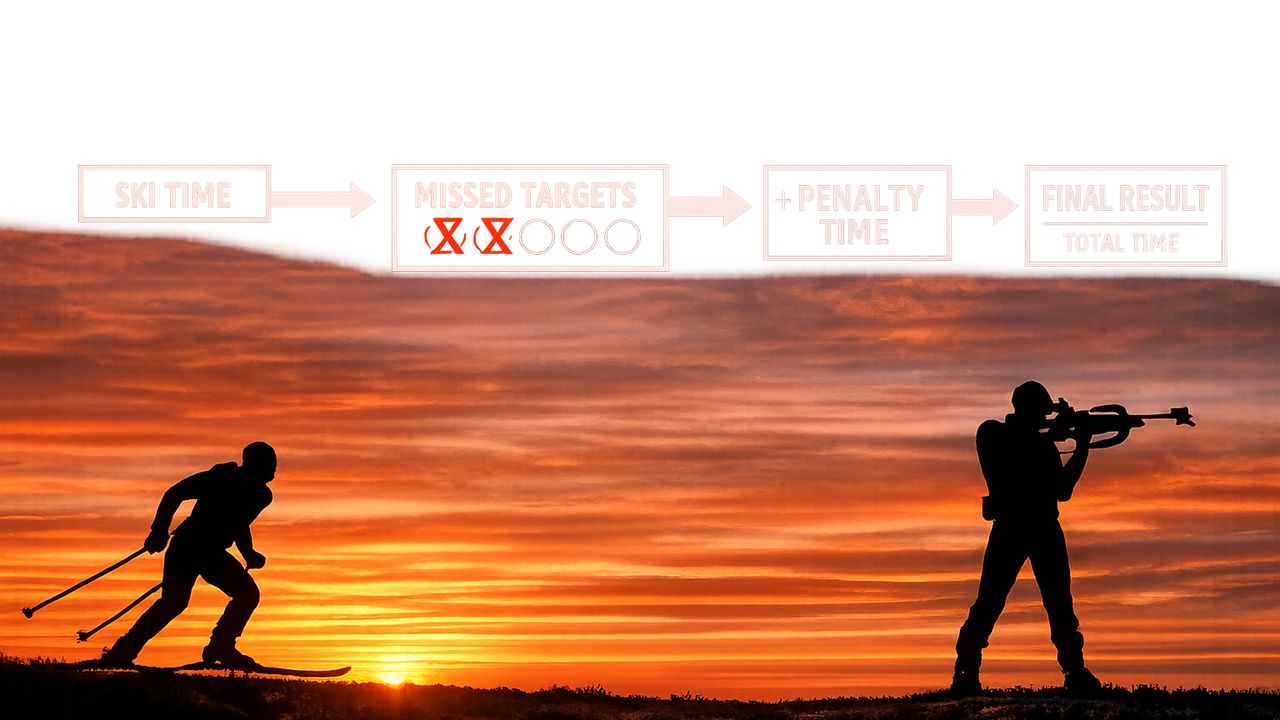
A missed target has to be paid for before the result is complete. Depending on the event, the athlete may ski extra distance, receive added time, or follow relay-specific shooting rules before the team’s penalty is settled.
For viewers, the range exit is the moment to watch. A clean shooter goes straight back to the course. An athlete with misses may turn into a penalty loop or carry added time that changes the adjusted ranking later.
That is how biathlon races swing in seconds. One clean stage can wipe out a ski deficit, while one shaky bout can pull a leader back into the pack.
Penalty loop vs. time penalty
A penalty loop is immediate and easy to see: the athlete skis extra distance before rejoining the main course. Track position can change right away.
A time penalty is less obvious. The athlete may look close on snow, but official timing shows the true adjusted gap.
Why clean shooting matters
Clean shooting means no missed-target penalty from that range visit. It saves time and keeps the athlete’s rhythm intact.
Accurate shooters can beat faster skiers if the faster skiers miss enough. That tension is the heart of biathlon scoring.
How biathletes shoot
Biathletes reach the range after skiing hard, often with heavy breathing and tired legs. They must settle quickly, take position, fire at the targets, secure the rifle, and return to the course without wasting time.
The skill is not just accuracy. It is accuracy under fatigue, with enough speed to avoid giving time away. Taking a few extra seconds to shoot clean can be smarter than rushing and missing.
Most races include prone and standing shooting. The positions look different on screen, and standing stages often feel more fragile because the athlete has less body support.
Prone and standing shooting
Prone shooting is done lying down, giving the athlete a steadier base. It often looks calmer because more of the body is supported by the mat.
Standing shooting is done upright, with more visible movement. Late standing stages can decide races because fatigue makes balance and breathing harder to control.
What kind of rifle is used in biathlon?
A biathlon rifle is carried while skiing and used at the range during each shooting stage. For beginners, the useful point is the routine: carry it safely, set up, shoot, secure it, and ski again.
Technical details, such as rifle weight, ammunition, or dimensions, should be checked against current official rules before being stated as specifications.
Race formats and how scoring changes
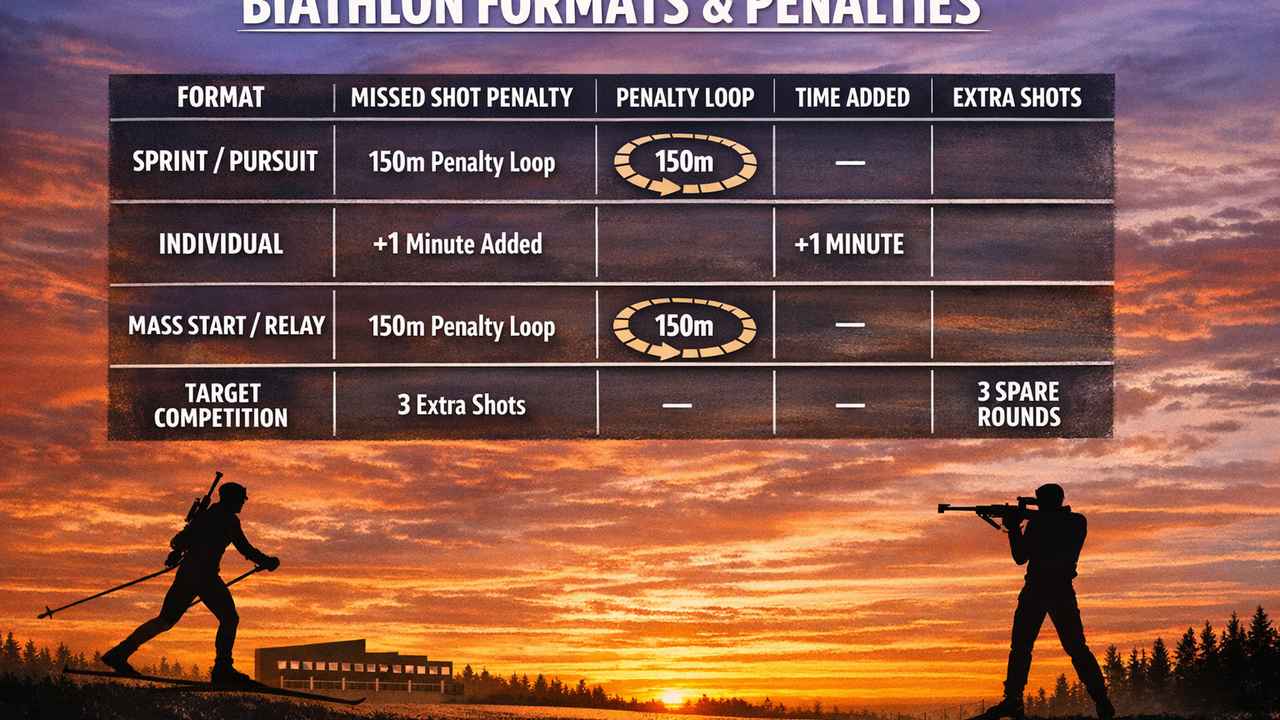
| Format | Start style | Shooting structure | Missed-shot penalty | Winner |
|---|---|---|---|---|
| Individual | Interval starts | Multiple visits, both positions | Added time | Lowest adjusted time |
| Sprint | Interval starts | Prone and standing | Penalty loop | Lowest adjusted time |
| Pursuit | Staggered by earlier result | Multiple visits | Penalty loop | First to finish |
| Mass start | Athletes start together | Multiple visits | Penalty loop | First to finish |
| Relay | Team legs | Shooting on each leg | Relay procedure, then penalties if needed | First team to finish |
| Mixed relay | Men and women on one team | Relay-style legs | Relay procedure, then penalties if needed | First team to finish |
Individual
The individual format rewards patience and accuracy. Since misses become added time, the final order can differ from what viewers see on course.
Sprint
The sprint is one of the easiest races to follow. It is shorter, has fewer shooting stages, and often helps set the start order for a pursuit.
Pursuit
A pursuit begins with gaps from an earlier race. Once the athletes are on course, the first to reach the finish wins.
Mass start
In a mass start, qualified athletes begin together. The race is direct, and the range usually creates the biggest shifts.
Relay
Relays combine several athletes into one team result. Each leg includes skiing, shooting, and an exchange to the next teammate.
Mixed relay
Mixed relay uses both men and women on the same team. It follows relay-style scoring, so every leg and exchange matters.
Core biathlon rules viewers should know
- Athletes must complete the correct course and follow the marked route.
- Shooting must happen in the required order for the event.
- Every missed target must be handled through the correct penalty method.
- Range procedure matters, including lane use and safe rifle handling.
- In interval-start races, the lowest adjusted time usually wins.
- In pursuit, mass start, and relay formats, the first across the line normally wins after penalties are complete.
- Relay exchanges connect one teammate’s leg to the next and can affect team flow.
How to read live results and standings
-
Start with ski splits. They show who is gaining or losing time before the next range visit.
-
Watch the target display. Clean shooting keeps an athlete moving, while misses signal penalties or added pressure.
-
Check penalty indicators. A leader can lose the advantage after extra skiing or added time.
-
Follow time gaps, not just positions. In interval-start races, the athlete shown first may not be the true leader.
-
Reassess after each shooting stage. The leaderboard often changes most when tired athletes shoot.
-
Read the finish by format. Adjusted-time races depend on the clock, while pursuit, mass start, and relay finishes are more direct.
Frequently asked questions
How many shots does a biathlete take in a race?
It depends on the format and how many times the race visits the range. Longer events generally include more shooting than shorter ones.
What happens if a biathlete misses a target?
A miss creates a penalty. Depending on the race, that can mean a penalty loop, added time, or relay-specific handling.
Why do some biathlon races start with time gaps?
Those are pursuit gaps from an earlier race. Athletes begin according to previous results, so the chase starts already spaced out.
Can a biathlete win with shooting misses?
Yes. A fast skier can still win after misses if the total performance is strong enough, but every miss tightens the margin.
How are relay penalties different from individual races?
Relays are team events built around legs and exchanges. Misses are handled through relay rules first, and the result affects the whole team.