How to Start Ice Skating for Beginners
Learning how to start ice skating for beginners begins with a few simple choices: wear warm, flexible clothing, get skates that fit securely, start near the boards, work on balance, then try short glides. A beginner lesson can also help you pick up stance, stopping, and safe movement sooner.
What to expect on your first time ice skating
A first public skate usually means check-in, skate rental, lacing, and a cautious step onto the ice. Start near the boards and move a few feet at a time before trying full laps.
Public sessions mean shared rink space, so control matters more than speed. Give yourself extra time off the ice to lace each boot firmly, stand up, and make sure the skates feel secure before you enter through the rink gate.
The ice will feel slick at first. Hold the boards, keep one hand near the rail, and take small steps until your feet stop sliding apart.
Most new skaters do better when they slow everything down. Use the first few minutes to stand tall, bend your knees slightly, and feel how each blade carries your weight. The goal is control, not speed.
What to wear and bring
Wear warm, flexible layers, gloves, and one smooth pair of socks that reaches above the skate boot. Beginner clothing should let you bend your knees, move your arms, and fall safely if needed.
- Wear warm layers that let you bend and move. A light jacket or sweatshirt with athletic pants usually works better than stiff jeans or bulky coats.
- Bring gloves or mittens. They keep your hands warm and protect your skin if you touch the ice.
- Choose one comfortable pair of socks that reaches above the skate boot. Thick socks can bunch up, while ankle socks may rub.
- Consider protective gear if you feel nervous, bring a child, or return after an injury. A helmet, wrist guards, or knee pads can help some beginners feel safer.
- Use a simple first-session checklist: warm clothes, gloves, proper socks, water for after skating, snug laces, and balance practice before gliding.
- Leave loose scarves, dangling cords, and pocket items off the ice when possible. Loose items can swing, fall, or distract you.
How to choose beginner skates and a rink
Beginner skates should hold your foot and ankle securely without pinching. A beginner-friendly rink should offer open space, clear entry points, and calm public sessions.
Your heel should not lift much inside the boot, and your toes should not press hard against the front. If rental skates feel painful, loose, or uneven, ask for another pair instead of forcing the session.
Look for ankle support, smooth lacing, and clean, even blades. You do not need expensive skates to learn, but the boots must help you stand upright. Dull, damaged, or poorly fitted skates make balance harder.
Choose a public skate session with room to move at a beginner pace. A rink with learn-to-skate classes, marked entry points, or quieter sessions helps new skaters practice safely. A less crowded session often helps more than a longer one.
Beginner ice skating steps
Beginner ice skating starts with stance, balance, small marches, short pushes, and controlled slowing. Practice each step near the boards before heading into open ice.
-
Step onto the ice carefully. Hold the boards, place one skate flat on the ice, then bring the other foot in slowly before moving.
-
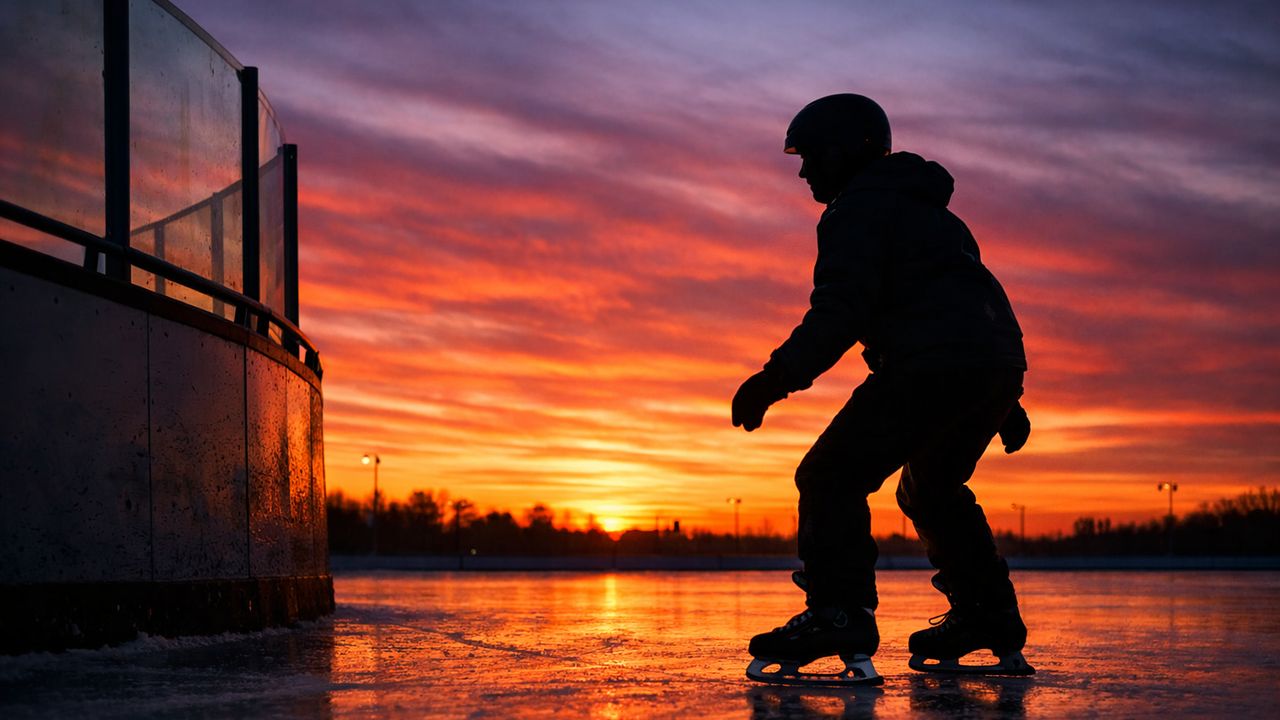
Find a steady stance. Keep your feet about hip-width apart, bend your knees slightly, and relax your arms out from your sides.
-
Practice balance before traveling. Shift your weight gently from one skate to the other while staying close enough to touch the boards.
-
March in place. Pick up one foot slightly, set the blade down, then repeat with the other foot.
-
Start with small pushes. Push lightly to the side and back with one foot, then let both skates glide for a short distance.
-
Keep your eyes ahead. Looking forward keeps your posture centered, while staring at your skates pulls your upper body down.
-
Learn to slow down early. Reduce your push size, bend your knees, and let the glide fade before you reach crowded areas or the rink wall.
-
Practice a basic stop with instruction or near the boards. Many beginners start with a gentle snowplow shape, but use the boards until you can control the stop safely.
Common beginner mistakes and safety tips
Most beginner falls come from leaning backward, locking the knees, looking down, or skating too fast before learning to stop. Safe beginners keep soft knees, watch traffic, and use the boards instead of grabbing other skaters.
- Leaning backward can cause quick falls. Keep your shoulders over your hips and your weight slightly toward the balls of your feet.
- Locking your knees makes every wobble sharper. Soft knees absorb small slips and help you turn or slow down.
- Looking down too much pulls your chest forward and hurts balance. Glance at the ice when needed, but look mostly where you want to go.
- Going too fast too soon creates problems before you know how to stop. Build speed only after you can slow down on purpose.
- Skating in dull, loose, or painful rentals makes basic skills harder. Change skates if the fit feels wrong after proper lacing.
- Moving into crowded lanes before you have control raises collision risk. Stay near the edge or in open ice until you can glide, slow, and steer.
- Grabbing another skater can make both people fall. Use the boards or ask rink staff for beginner help.
When to take ice skating lessons
Take ice skating lessons early if you feel nervous, stuck, or unsure how to stop. A coach teaches stance, falling, getting up, gliding, stopping, and turning before bad habits settle in.
Self-practice still helps. Public skate time lets your legs adjust to the ice, and repetition makes basic movements feel familiar. If you are learning from scratch, use lessons for technique and open skate sessions for practice.
Take lessons sooner if you feel stuck away from the boards or want to move toward figure skating, hockey, recreational skating, or confident family skating.
FAQ
Beginner ice skating questions usually focus on age, comfort, skate choice, skate style, and falling. Short answers can help you decide what to practice next.
Can adults learn to ice skate from scratch?
Yes. Adults can learn from scratch by starting slowly, using well-fitted skates, and practicing balance and stopping before speed.
How long does it take to feel comfortable on ice skates?
Comfort varies by fitness, confidence, practice time, and instruction. Some beginners feel steadier after one session, while others need several rink visits.
Should beginners rent or buy ice skates?
Most beginners should rent first, especially if they do not know how often they will skate. Buying makes sense once you skate regularly and know your preferred style.
Is figure skating or hockey skating easier for beginners?
Neither style is easier for everyone. Figure skates have a longer blade and toe pick, while hockey skates have a curved blade built for agility.
What should I do if I keep falling while ice skating?
Slow down and return to the boards to reset your stance. Bend your knees, center your weight, check your skate fit, and consider a beginner lesson.